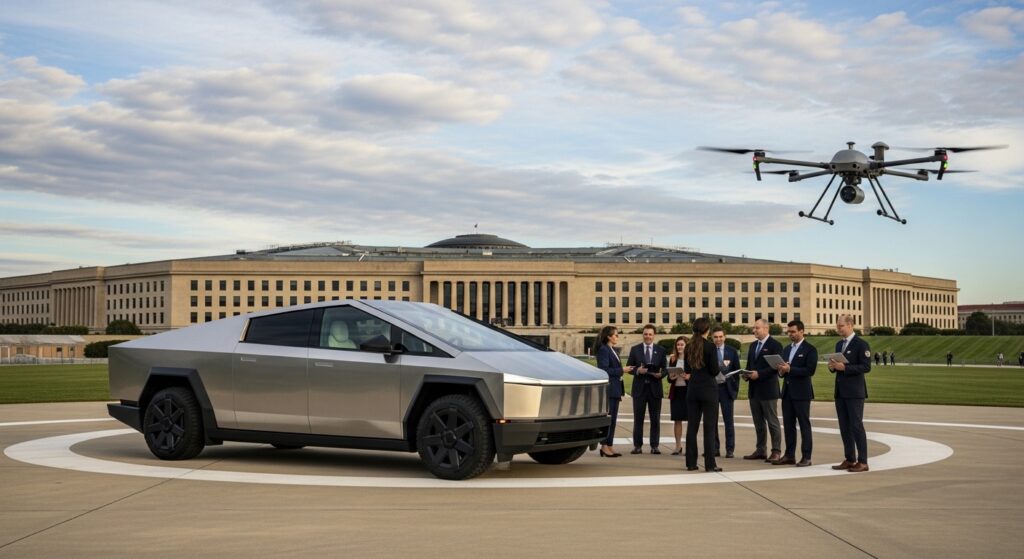
The intersection of military innovation and cutting-edge technology has always fascinated the world. Recently, the spotlight has turned to the collaboration—or interest—between the Pentagon, Big Tech, and Tesla Cybertruck. With Tesla’s futuristic electric pickup and advanced technology companies providing AI, software, and manufacturing solutions, a new frontier of defense applications and military readiness is emerging.
Tesla Cybertruck: Beyond Civilian Roads
The Tesla Cybertruck is Elon Musk’s bold vision of the electric pickup—a vehicle designed for strength, durability, and futuristic functionality. Its features, such as ultra-hard exoskeleton, long-range electric batteries, and advanced autopilot capabilities, have made it a symbol of modern automotive innovation.
Features Relevant to Military Applications
-
Durability: The Cybertruck’s exoskeleton uses ultra-hard stainless steel, providing protection against extreme conditions and minor ballistic threats.
-
Electric Powertrain: Its high-performance electric motors reduce fuel dependence, which is attractive for military logistics and remote operations.
-
Autonomy and AI: Tesla’s autopilot system and potential full self-driving capabilities could translate into autonomous or semi-autonomous military logistics and reconnaissance vehicles.
-
Load and Utility Capacity: With a large payload and towing capacity, the Cybertruck could serve as a mobile command post, supply transport, or mobile surveillance unit.
These features make the Cybertruck more than a civilian novelty—it’s being analyzed for potential use in defense and government applications.
Big Tech’s Role in Modern Military Programs
The Pentagon has increasingly turned to Big Tech companies for artificial intelligence, cybersecurity, autonomous systems, and software-driven defense solutions. Partnerships with tech companies aim to:
-
Enhance battlefield awareness through AI-powered data analytics
-
Improve cybersecurity defenses against evolving digital threats
-
Integrate autonomous systems like drones and unmanned vehicles
-
Accelerate innovation cycles with agile tech development rather than traditional military procurement timelines
Big Tech companies such as Microsoft, Google, and Palantir have already worked on Pentagon contracts, providing software, AI, and logistics platforms. The integration of these capabilities with vehicles like the Tesla Cybertruck represents a natural next step.
Pentagon Interest in Tesla Cybertruck
While Tesla has not publicly confirmed any military contracts for the Cybertruck, analysts and defense experts have speculated on its potential:
Potential Military Applications
-
Troop Transport: Electric, durable vehicles for short- and medium-range transport in urban or rugged terrain.
-
Reconnaissance and Surveillance: Autonomous or semi-autonomous versions could carry sensors and cameras for intelligence gathering.
-
Supply Chain Logistics: Electric fleets could transport equipment and supplies without relying on fuel convoys, reducing vulnerability.
-
Disaster Response: Military units could use Cybertrucks in disaster relief operations where electricity and mobility are crucial.
The combination of Tesla’s advanced battery technology, durability, and autonomy makes the Cybertruck a candidate for military modernization efforts.
Challenges of Integrating Civilian Tech into Defense
Despite the appeal, there are challenges in adopting civilian technology like Tesla’s Cybertruck for military use:
-
Cybersecurity Concerns: Vehicles connected to cloud networks and AI systems could be vulnerable to hacking.
-
Ruggedness Testing: While durable, the Cybertruck may require additional reinforcement to withstand combat-grade environments.
-
Supply Chain Security: Military standards often require controlled and secure manufacturing processes.
-
Regulatory Hurdles: Federal contracts require rigorous testing, certification, and compliance with defense acquisition standards.
These hurdles mean that while promising, the integration of Big Tech products into the Pentagon’s arsenal is a carefully managed process.
The Future of Military Electric Vehicles
The convergence of Pentagon big tech tesla cybertruck innovation signals a broader trend: electrification and automation of military vehicles. Advantages include:
-
Reduced fuel dependency in combat zones
-
Lower operational costs over time
-
Stealth advantages due to quieter electric motors
-
Enhanced modularity for autonomous operations
As technology continues to evolve, electric military vehicles may become as common as traditional armored trucks, especially when combined with AI, cybersecurity, and advanced sensors.
Ethical and Strategic Considerations
The Pentagon’s potential collaboration with tech companies raises questions beyond logistics:
-
Autonomous Warfare: How much autonomy should AI-driven vehicles like the Cybertruck have in military operations?
-
Civil-Military Tech Integration: Balancing the benefits of civilian innovation with the security and reliability required in defense.
-
Public Perception: High-profile tech companies entering military contracts may face scrutiny from stakeholders concerned about ethical implications.
Addressing these considerations is crucial for the responsible adoption of cutting-edge tech in national defense.
How Big Tech and Tesla Could Shape the Future Battlefield
If the Pentagon, Big Tech, and Tesla align strategically, the battlefield of the future could see:
-
AI-enhanced vehicles capable of reconnaissance without risking human lives
-
Electric fleets supporting troops in remote or high-risk zones
-
Real-time data sharing between autonomous vehicles and command centers
-
Cybersecurity layers that protect AI-enabled vehicles from interference or attacks
This represents a paradigm shift in how technology companies and the military collaborate.
Conclusion
The combination of Pentagon initiatives, Big Tech innovation, and Tesla Cybertruck technology points toward a future where electric, autonomous, and AI-powered vehicles play a central role in defense operations. While challenges exist, including cybersecurity, regulations, and field testing, the potential benefits for troop safety, operational efficiency, and sustainability are significant.
As Tesla continues to push the boundaries of automotive technology and Big Tech advances AI and software capabilities, the Pentagon’s interest in exploring these innovations is a natural progression. The partnership may redefine military mobility, logistics, and strategic operations in the decades to come.
The intersection of civilian innovation and defense technology underscores the evolving nature of modern warfare, highlighting how collaboration between public and private sectors can drive the next generation of military solutions.