
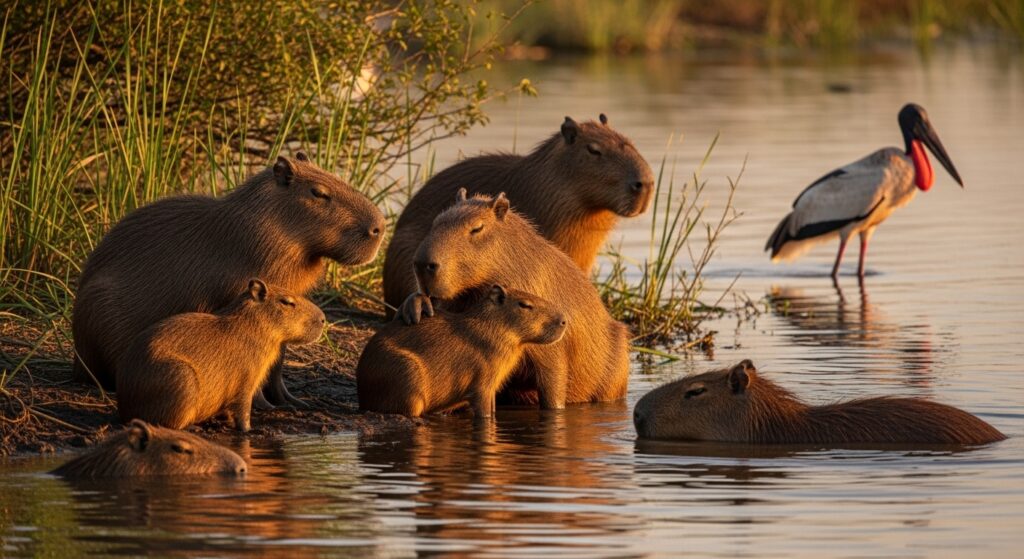
Capybaras are the largest rodents in the world, and they have a charm that’s hard to resist. With their gentle demeanor and sociable nature, these fascinating creatures have captured the hearts of many. Found primarily in South America, capybaras thrive in a range of environments, from lush wetlands to grassy savannas.
But there’s more to these remarkable animals than just their endearing looks. Their unique behaviors and strong social bonds reveal an intricate world that awaits discovery. As we delve deeper into the habitats where capybaras roam freely, you’ll uncover how they interact with each other and adapt to their surroundings.
Join us on this journey as we explore the captivating lives of capybaras in the wild!
Their Natural Habitats and Distribution
Capybaras thrive in a variety of natural habitats. They are predominantly found near water sources like rivers, lakes, and wetlands. These environments provide the moisture essential for their survival.
You’ll discover capybaras scattered across South America. They inhabit countries such as Venezuela, Colombia, Brazil, Paraguay, and Argentina. Their range extends to both tropical forests and savannas.
These adaptable creatures prefer areas with dense vegetation. This foliage offers them safety from predators while providing ample food sources like grasses and aquatic plants.
Interestingly, capybaras are not confined to remote regions; they often coexist alongside human settlements. Parks and farmlands can also accommodate these social mammals if proper conditions exist.
Such versatility underscores their ability to adapt in a changing world. It’s this resilience that allows them to flourish across diverse landscapes.
Behavior Patterns in the Wild
Capybaras exhibit fascinating behavior patterns that reflect their adaptability. These semi-aquatic mammals are most active during dawn and dusk, taking advantage of cooler temperatures.
They thrive near water sources like rivers and lakes, often seen lounging in the shallows to stay cool. Their agility allows them to swim gracefully, making them adept at escaping predators.
Foraging for food is a social affair. Capybaras graze on grasses and aquatic plants together, showcasing their cooperative nature. This group activity strengthens bonds within the herd.
Vocal communication is key among capybaras. They use a variety of sounds—barks, whistles, and even purrs—to convey messages about danger or distress.
When it comes to grooming, these animals engage in mutual care routines that reinforce social ties within the group. Such behaviors highlight not only their intelligence but also their strong sense of community in the wild.
Social Structures and Interactions
Capybaras are known for their strong social bonds, often living in groups that can range from 10 to 20 individuals. These herds typically consist of a mix of adults and young ones, creating a dynamic community.
Within these groups, hierarchy plays a significant role. Dominant males often take the lead during activities like foraging and vigilance against predators. However, interactions among members are generally friendly and cooperative.
Communication is key in capybara societies. They use various vocalizations such as barks, whistles, and purrs to convey messages about danger or food availability. Grooming is also common; it strengthens social ties while helping with hygiene.
Group living offers safety in numbers. When threatened by predators like jaguars or caimans, capybaras will alert each other and retreat into water—a habitat where they excel at evading danger through swimming.
Unique Adaptations and Survival Strategies
Capybaras possess remarkable adaptations that enhance their survival in the wild. Their webbed feet allow for efficient swimming, making them agile in water. This ability helps them escape predators like jaguars and caimans.
Their social nature also plays a critical role. Living in groups offers protection through numbers. With strong bonds among members, they can alert each other to dangers lurking nearby.
These gentle giants have developed a unique diet as well. They primarily consume grasses and aquatic plants, which are abundant in their habitats. Their digestive system is adapted for breaking down tough plant material efficiently.
Additionally, capybaras regulate their body temperature by soaking in cool water during hot days or resting on riverbanks at dusk when temperatures drop. This behavior ensures they stay comfortable while minimizing energy expenditure throughout the day.
Threats to Capybara Populations
Capybaras face several threats that impact their populations. Habitat loss is a primary concern. As human development expands, wetlands and grasslands are increasingly converted for agriculture and urbanization.
Predation also poses a risk. Natural predators such as jaguars, pumas, and caimans target capybaras in the wild. Young or weak individuals are particularly vulnerable.
Additionally, hunting has become an issue in certain regions. Capybaras are hunted for their meat and skin, leading to population declines in some areas.
Environmental changes due to climate change further exacerbate these challenges. Altered rainfall patterns affect water levels crucial for capybara habitats.
Pollution can degrade the quality of water sources they rely on, impacting their health and food supply. These combined factors place significant stress on capybara communities across South America.
Conservation Efforts and Future Outlook
Capybara populations face numerous challenges in the wild, prompting various conservation efforts. Organizations dedicated to wildlife preservation are increasingly focused on protecting these unique creatures and their habitats. By establishing protected areas and promoting sustainable land use practices, they aim to create safe environments for capybaras.
Education plays a vital role in these efforts. Raising awareness about the ecological importance of capybaras helps foster respect and understanding among local communities. Engaging people through eco-tourism can also provide incentives for conservation while generating income that supports habitat protection.
Research is essential as well. Scientists study capybara behavior and ecology to better understand their needs. This knowledge informs policies aimed at conserving both the species and its environment.
The future outlook hinges greatly on how effectively we address threats such as habitat loss and poaching. Collaborative initiatives between governments, NGOs, and local communities will be critical in safeguarding capybaras for generations to come.
By working together towards sustainable solutions, there is hope that these fascinating animals will thrive once again in the wild.