
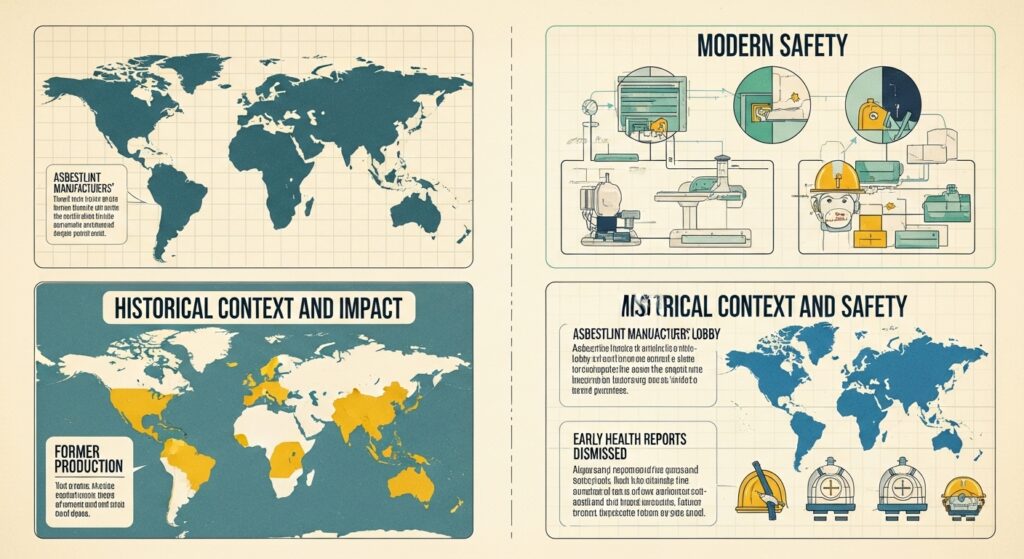
In the world of industrial materials and construction history, certain products once played a major role but later became controversial due to health concerns. One such material is Asbestlint. Although it may not be widely discussed today, it was once an important component in many industrial and building applications. Understanding what Asbestlint is, how it was used, and why it has become a subject of safety discussions helps us better understand the evolution of construction materials and workplace safety standards.
This article explores the meaning of Asbestlint, its historical significance, common uses, potential risks, and the regulations that now surround materials containing asbestos.
What Is Asbestlint?
Asbestlint is a type of tape or strip material made with asbestos fibers. It was commonly used in the past as a sealing, insulating, or protective material in various industrial and mechanical applications. Because asbestos is naturally resistant to heat, fire, and chemicals, it was widely used in products that required durability under extreme conditions.
The word itself combines two parts: “asbest,” referring to asbestos, and “lint,” which generally means a strip or band-like material. Together, the term refers to asbestos-based tape or sealing strips that were used in construction, machinery, and insulation systems.
During the twentieth century, Asbestlint became a practical solution for many industries because it offered strong insulation properties and resistance to high temperatures.
Historical Use of Asbestlint
The widespread use of Asbestlint began during the industrial expansion of the early and mid-1900s. At that time, asbestos was considered a miracle material because of its remarkable physical properties.
Industries that required heat-resistant materials quickly adopted asbestos products, including tape, sheets, panels, and insulation materials. Asbestlint was commonly used in:
-
Steam pipes and heating systems
-
Industrial boilers
-
Mechanical equipment insulation
-
Electrical wiring protection
-
Automotive engine components
Because it could withstand high temperatures without burning, it was especially useful in environments where fire resistance was essential.
For many decades, Asbestlint was considered a reliable and efficient material for sealing joints and insulating equipment.
Why Asbestlint Was Popular
The popularity of Asbestlint was largely due to the unique characteristics of asbestos fibers. These fibers offered several advantages that made them ideal for industrial applications.
First, asbestos is highly resistant to heat. Materials containing asbestos can tolerate extremely high temperatures without breaking down or catching fire.
Second, asbestos fibers are strong and flexible. When woven into tapes or strips, they create durable materials that can withstand wear and tear.
Third, asbestos has natural insulating properties. This makes it useful for controlling heat and protecting surrounding components from high temperatures.
Finally, asbestos is resistant to chemicals and corrosion. This allowed materials like Asbestlint to perform well in harsh industrial environments.
Because of these qualities, Asbestlint became widely used in factories, construction projects, and mechanical systems.
Common Applications in Buildings and Industry
Asbestlint served many practical purposes in both industrial facilities and residential structures.
One of its most common uses was sealing pipe joints in heating systems. Steam pipes often required insulation and sealing materials to maintain efficiency and prevent heat loss. Asbestlint provided both sealing and insulation in one product.
It was also used to wrap around pipes and ducts to protect surrounding structures from heat damage. In industrial plants, this type of insulation helped maintain safe operating temperatures.
Another application involved machinery. Equipment that generated heat often needed protective materials around key components. Asbestlint helped shield surrounding parts and prevent overheating.
In some cases, the material was also used in electrical systems to provide fire-resistant insulation.
Health Concerns Linked to Asbestos
Although Asbestlint once seemed like a valuable industrial material, scientific research later revealed serious health risks associated with asbestos exposure.
When asbestos-containing materials deteriorate or are disturbed, tiny fibers can be released into the air. If these fibers are inhaled, they may become trapped in the lungs.
Long-term exposure to asbestos fibers has been linked to several serious health conditions, including:
-
Lung diseases
-
Respiratory complications
-
Certain types of cancer
Because these diseases may take many years to develop, the dangers of asbestos were not fully recognized until decades after its widespread use.
Once the health risks became clear, governments and health organizations began introducing strict regulations to control the use of asbestos materials.
Regulation and Decline of Asbestlint
As awareness of asbestos-related health risks increased, many countries started limiting or banning asbestos-containing materials.
Construction regulations changed significantly, and manufacturers began searching for safer alternatives. Over time, products like Asbestlint were phased out and replaced with modern insulation materials that do not contain asbestos.
Today, the production of asbestos-based materials is heavily restricted or prohibited in many parts of the world.
However, older buildings and industrial systems may still contain asbestos materials installed decades ago. In such cases, specialized professionals are required to safely handle and remove these materials.
Safe Handling and Removal
When asbestos-containing materials like Asbestlint are found in older structures, they must be managed carefully to avoid releasing fibers into the air.
Professional asbestos removal teams use specialized equipment and protective clothing to safely remove or contain these materials. The process typically includes sealing off the work area, using controlled removal methods, and disposing of the material according to environmental regulations.
Homeowners and building managers are generally advised not to attempt removal themselves. Improper handling can increase the risk of exposure and contamination.
Instead, trained experts should assess the situation and determine the safest approach.
Modern Alternatives to Asbestlint
Today, safer materials have replaced asbestos-based products in most industries. Advances in material science have produced insulation and sealing solutions that provide similar benefits without the health risks.
Modern alternatives include fiberglass tapes, ceramic fiber insulation, and high-temperature synthetic materials. These products offer heat resistance, durability, and flexibility while meeting modern safety standards.
Because of these innovations, industries can achieve high levels of performance without relying on hazardous substances.
Importance of Awareness and Education
Understanding the history of materials like Asbestlint is important for several reasons. First, it helps explain why certain building materials are no longer used today.
Second, it highlights how scientific research can lead to improved safety standards. As knowledge about health risks grows, industries can adapt and develop better solutions.
Finally, awareness helps property owners and workers recognize potential hazards in older buildings. Knowing how to identify and manage asbestos materials helps protect both workers and residents.
Education and regulation together play a vital role in preventing exposure and ensuring safe environments.
The Legacy of Asbestlint
Although Asbestlint is no longer commonly used, it remains an important part of industrial history. It represents a time when asbestos was widely trusted as a versatile and durable material.
The shift away from asbestos also demonstrates how industries evolve when new information becomes available. Materials once considered revolutionary can later be replaced by safer and more advanced technologies.
Today, the focus is on innovation that balances performance with safety, ensuring that modern materials protect both people and the environment.
Conclusion
Asbestlint was once a widely used material valued for its heat resistance, durability, and insulating properties. For decades, it played a role in construction, industrial equipment, and mechanical systems.
However, increased understanding of asbestos-related health risks led to major changes in regulations and building practices. As a result, materials like Asbestlint have largely been replaced by safer alternatives.
Learning about Asbestlint provides insight into the history of industrial materials and the importance of safety in modern construction. By understanding the past, industries can continue developing solutions that protect both performance and human health.